EUROPEAN UNION:Economic and political association consisting of 28 democratic European countries that exists because of a series of treaties and agreements that were signed from the mid-20th century onwards.
CUSTOMS: State department that controls the good entering or leaving the country and the taxes collected.
TARIFF:Tax on a product imported from another country.
TO RESEARCH: To investigate.
MERGING: Joining.
SURPLUS: An amount that is more than is needed.
SHIPYARD: A place where ships are made or repaired.
FOODSTUFF: Any substance that is used as food or to make food.
SEAFARING: Connected with travelling by sea.
Showing posts with label GEOGRAPHY.. Show all posts
Showing posts with label GEOGRAPHY.. Show all posts
Tuesday, 20 June 2017

UNIT 8 GEOGRAHY GLOSSARY: TERTIARY SECTOR
TERTIARY SECTOR: Economic sector that involves activities that do not produce material products,but which instead provide individuals, companies and the government with services such as transport,healthcare,tourism,education,administration and banking.
TOURISM: Movement of people away from their regular home or place of residence to another area, for leisure and for a period of longer tan a day.
TRADE: Economic activity that involves buying and selling products and services.
TRANSPORT: Movement of people and goods from one point to another, using a particular vehicle or mode of transport and a transport network.
SAVINGS BANK: Financial institution that promotes saving.
LOAN: Money a person receives from a bank and which they have to pay back, with interest, within a period of time
CUSTOMS UNION:
An agreement between two or more countries to reduce or remove any taxes on goods traded between them, and to charge the same taxes on goods imported from other countries.
PERISHABLE PRODUCT: Liable to spoil or decay.
CARGO:Freight.
TRADING BLOCS:Associations that encourage international trade between their members.
TOURISM: Movement of people away from their regular home or place of residence to another area, for leisure and for a period of longer tan a day.
TRADE: Economic activity that involves buying and selling products and services.
TRANSPORT: Movement of people and goods from one point to another, using a particular vehicle or mode of transport and a transport network.
SAVINGS BANK: Financial institution that promotes saving.
LOAN: Money a person receives from a bank and which they have to pay back, with interest, within a period of time
CUSTOMS UNION:
An agreement between two or more countries to reduce or remove any taxes on goods traded between them, and to charge the same taxes on goods imported from other countries.
PERISHABLE PRODUCT: Liable to spoil or decay.
CARGO:Freight.
TRADING BLOCS:Associations that encourage international trade between their members.
MY FINAL SELF-ASSESSMENT
This school year has been very special for me. I think I've learnt a lot and I met amazing people. Although it has been more difficult that last one, this year was fantastic.
I'm sure that I've improved my English a lot because I learnt a lot of vocabulary and expressions that were new for me. I've worked very hard and the results were great, so that means that if you work hard, you'll get good marks. Cristina made classes very dynamic and entertaining and she has taught us a lot of things. Also, games with Clarissa were very cool and fun, everyone had an incredible time playing all together. The projects were quite entertaining. My favourite one was "Can't stop the feeling " video because it was our first project and everybody loved it.
In Geography I've learnt a lot of interesting things about the European Union, the secondary sector, the tertiary sector, climates, population, forms of government, economy... Teresa helped us a lot because with her explanations everything was easier. Studying Geography in English wasn't as difficult as all of us believed and we've learnt many useful things and many vocabulary in English. I thing that my English level has improved a lot because of belonging to the bilingual section.
In PE we have practised many different sports (like basketball, football, badminton...) and we've learnt some physical skills like endurance, stamina, flexibility. This subject was really enjoyable and we did many fun things.
Finally, I wanted to say thank you to everyone because we have had an unforgettable year. Hope next one will be as good as this one or even better!!
Have a good time during your summer holidays and see you son guys!!!
I'm sure that I've improved my English a lot because I learnt a lot of vocabulary and expressions that were new for me. I've worked very hard and the results were great, so that means that if you work hard, you'll get good marks. Cristina made classes very dynamic and entertaining and she has taught us a lot of things. Also, games with Clarissa were very cool and fun, everyone had an incredible time playing all together. The projects were quite entertaining. My favourite one was "Can't stop the feeling " video because it was our first project and everybody loved it.
In Geography I've learnt a lot of interesting things about the European Union, the secondary sector, the tertiary sector, climates, population, forms of government, economy... Teresa helped us a lot because with her explanations everything was easier. Studying Geography in English wasn't as difficult as all of us believed and we've learnt many useful things and many vocabulary in English. I thing that my English level has improved a lot because of belonging to the bilingual section.
In PE we have practised many different sports (like basketball, football, badminton...) and we've learnt some physical skills like endurance, stamina, flexibility. This subject was really enjoyable and we did many fun things.
Finally, I wanted to say thank you to everyone because we have had an unforgettable year. Hope next one will be as good as this one or even better!!
Have a good time during your summer holidays and see you son guys!!!
Friday, 2 June 2017
3rd TERM ENGLISH AND GEOGRAPHY PROJECT:PARIS
Here you can watch my video about Paris. Hope you like it :)
Monday, 3 April 2017
Sunday, 2 April 2017
UNIT 6 GEOGRAPHY GLOSSARY: PRIMARY SECTOR
AGRICULTURAL PRODUCTS
CEREALS:
-Wheat: Trigo.
-Barley: Cebada.
-Corn: Maiz.
-Sorghum: Sorgo.
-Millet: Mijo.
-Oats: Centeno.
VEGETABLES AND SEEDS:
-Chickpeas: Garbanzos.
-Lentils: Lentejas.
-Cucumber: Pepino.
-Sugar cane: Caña de azúcar
-Sugar beet: Remolacha azucarera.
-Soybeans: Soja.
-Alfalfa: Alfalfa.
INDUSTRIAL CROPS:
-Cotton: Algodón.
-Sunflower: Girasol.
VEGETABLE FIBRES:
-Linen: Lino.
-Jute: Yute.
-Sisal: Cuerda natural
-Hemp: Cánamo.
VEGETABLE OILS:
-Palm oil: Aceite de palma.
-Peanut oil: Aceite de cacahuete.
OTHER AGRICULTURAL CROPS:
-Yam: Batata.
-Avocado: Aguacate
-Dates: Dátiles.
FORESTRY VOCABULARY
CONIFERS: Coníferos
-Pine: Pino
-Fir: Abeto
HARDWOOD:
-Birch: Abedul.
-Beech: Halla.
-Maple: Arce.
-Oak: Roble.
PRECIOUS WOOD:
-Ebony: Ébano.
-Teak: Teca.
-Mahogany: Caoba.
-Cedar: Cedro.
FISH
-Sardine: Sardina.
-Hake: Merluza.
-Whiting: Pescadilla.
-Bonito: Bonito, atún.
-Tuna: Bonito, atún.
-Octopus: Pulpo.
-Cuttlefish: Sepia.
-Squid: Calamar.
-Mussel: Mejillón.
-Clam: Almeja.
-King prawn: Camraón real.
-Prawn: Gamba.
-Spider crab:
-Cod: Bacalao.
-Anchovy: Anchoa.
-Herring: Arenque.
-Trout: Trucha.
-Carp: Carpa.
-Turbot: Rodaballo.
-Salmon: Salmón.
-Sea bream: Besugo.
-Sea bass: Lubina.
-Oysters: Ostras.
-Shrimp:Camarón.
-Lobster: Langosta.
-Sole: Lenguado.
CEREALS:
-Wheat: Trigo.
-Barley: Cebada.
-Corn: Maiz.
-Sorghum: Sorgo.
-Millet: Mijo.
-Oats: Centeno.
VEGETABLES AND SEEDS:
-Chickpeas: Garbanzos.
-Lentils: Lentejas.
-Cucumber: Pepino.
-Sugar cane: Caña de azúcar
-Sugar beet: Remolacha azucarera.
-Soybeans: Soja.
-Alfalfa: Alfalfa.
INDUSTRIAL CROPS:
-Cotton: Algodón.
-Sunflower: Girasol.
VEGETABLE FIBRES:
-Linen: Lino.
-Jute: Yute.
-Sisal: Cuerda natural
-Hemp: Cánamo.
VEGETABLE OILS:
-Palm oil: Aceite de palma.
-Peanut oil: Aceite de cacahuete.
OTHER AGRICULTURAL CROPS:
-Yam: Batata.
-Avocado: Aguacate
-Dates: Dátiles.
FORESTRY VOCABULARY
CONIFERS: Coníferos
-Pine: Pino
-Fir: Abeto
HARDWOOD:
-Birch: Abedul.
-Beech: Halla.
-Maple: Arce.
-Oak: Roble.
PRECIOUS WOOD:
-Ebony: Ébano.
-Teak: Teca.
-Mahogany: Caoba.
-Cedar: Cedro.
FISH
-Sardine: Sardina.
-Hake: Merluza.
-Whiting: Pescadilla.
-Bonito: Bonito, atún.
-Tuna: Bonito, atún.
-Octopus: Pulpo.
-Cuttlefish: Sepia.
-Squid: Calamar.
-Mussel: Mejillón.
-Clam: Almeja.
-King prawn: Camraón real.
-Prawn: Gamba.
-Spider crab:
-Cod: Bacalao.
-Anchovy: Anchoa.
-Herring: Arenque.
-Trout: Trucha.
-Carp: Carpa.
-Turbot: Rodaballo.
-Salmon: Salmón.
-Sea bream: Besugo.
-Sea bass: Lubina.
-Oysters: Ostras.
-Shrimp:Camarón.
-Lobster: Langosta.
-Sole: Lenguado.
UNIT 5 GEOGRAPHY: ECONOMY
GOODS: Objects that have a use or value for the person who possesses them.
PRICE: Cost of a product or services.
RESOURCES: Thing a person or a country has that can be used for economic benefit.
FACTORS OF PRODUCTION: Resource used to produce goods or offer services.
SUPPLY: Goods and services that are available for sale.
DEMAND: The amount of a product or service that consumers purchase at a specified price.
ECONOMIC POLICY: Actions that governments take to organize the economy.
CONSUMER: Person who uses goods or services.
PROFIT: Difference between what it costs to make something or provide a service and what it is sold for.
INCOME: A company's profit in a particular period of time.
GENDER: The fact of being male or female, especially when considered with reference to social and cultural differences, not differences in biology.
RETIREMENT: The fact of stopping working because you have reached a particular age.
EMPLOYMENT: Work, especially when its done to earn money; the state of being employed.
ECONOMIC SECTORS: A part of an area of activity, especially of a country's economy.
SALARY: Money that employees received for doing their job. especially professional employees or people working in an office, usually paid every month.
WORKER STAFF: All the workers employed in an organization considered as a group.
OUTSOURCE: To arrange for somebody outside a company to do work or provide goods for the company.
CONTRACT: An official written agreement.
ILLEGAL: Not allowed by the law.
PRIMARY SECTOR: Activities involved in obtaining resources from raw materials. These activities are agriculture, livestock farming, fishing, forestry and mining. They are the oldest economic activities.
SECONDARY SECTOR: Activities involved in converting raw materials into manufactured products(industry) or building housing and infrastructure(motorways, reservoirs). They require a variety of energy resources.
TERTIARY SECTOR: Activities that provide services: education, healthcare, trade, tourism, transport...)
PRICE: Cost of a product or services.
RESOURCES: Thing a person or a country has that can be used for economic benefit.
FACTORS OF PRODUCTION: Resource used to produce goods or offer services.
SUPPLY: Goods and services that are available for sale.
DEMAND: The amount of a product or service that consumers purchase at a specified price.
ECONOMIC POLICY: Actions that governments take to organize the economy.
CONSUMER: Person who uses goods or services.
PROFIT: Difference between what it costs to make something or provide a service and what it is sold for.
INCOME: A company's profit in a particular period of time.
GENDER: The fact of being male or female, especially when considered with reference to social and cultural differences, not differences in biology.
RETIREMENT: The fact of stopping working because you have reached a particular age.
EMPLOYMENT: Work, especially when its done to earn money; the state of being employed.
ECONOMIC SECTORS: A part of an area of activity, especially of a country's economy.
SALARY: Money that employees received for doing their job. especially professional employees or people working in an office, usually paid every month.
WORKER STAFF: All the workers employed in an organization considered as a group.
OUTSOURCE: To arrange for somebody outside a company to do work or provide goods for the company.
CONTRACT: An official written agreement.
ILLEGAL: Not allowed by the law.
PRIMARY SECTOR: Activities involved in obtaining resources from raw materials. These activities are agriculture, livestock farming, fishing, forestry and mining. They are the oldest economic activities.
SECONDARY SECTOR: Activities involved in converting raw materials into manufactured products(industry) or building housing and infrastructure(motorways, reservoirs). They require a variety of energy resources.
TERTIARY SECTOR: Activities that provide services: education, healthcare, trade, tourism, transport...)
UNIT 4 GEOGRAPHY GLOSSARY:STATE AND GOVERNMENT SYSTEM
NATIONAL ANTHEM:A song that has special importance for a particular group of people, an organization,or a country, often sung on a special occasion.
POLICIES: a set of ideas or a plan of what to do in particular situations that has been agreed officially by a group of people, a business organization, a government or a political party.
NATION: A group of people who share common customs, origins, history and frequently, language.
STATE: The supreme public power within a sovereign political entity.
COUNTRY: A territory distinguished by its people, culture, language, geography, etc
INHABITANT: A person or animal that is a permanent resident of a particular place.
CITIZENS: A resident of a city or town, especially one entitled to vote and enjoy other privileges there.
WORLDWIDE: Applying or extending throughout the world; universal.
CIVIL SERVANTS: Government workers; usually hired on the basis of the competitive examinations.
TAXES: Money you have to pay to the government so that it can provide you public services.
BORDER: The line that divides two countries or areas.
LAW: The whole system of rules that everyone in a country or society must obey.
PLURALISM: The existence of many different groups of people in one society(people of different races, of different political or religious beliefs).
TO MANIPULATE: To control or influence somebody or something, often in a dishonest way so that they don't realize it.
INHERIT: To receive money, property,etc from somebody when they die.
ELECTIONS: The process of choosing a person or a group of people for a position, espcially a political position by voting.
BUDGETS:the amount of money you have available to spend.
POLICIES: a set of ideas or a plan of what to do in particular situations that has been agreed officially by a group of people, a business organization, a government or a political party.
NATION: A group of people who share common customs, origins, history and frequently, language.
STATE: The supreme public power within a sovereign political entity.
COUNTRY: A territory distinguished by its people, culture, language, geography, etc
INHABITANT: A person or animal that is a permanent resident of a particular place.
CITIZENS: A resident of a city or town, especially one entitled to vote and enjoy other privileges there.
WORLDWIDE: Applying or extending throughout the world; universal.
CIVIL SERVANTS: Government workers; usually hired on the basis of the competitive examinations.
TAXES: Money you have to pay to the government so that it can provide you public services.
BORDER: The line that divides two countries or areas.
LAW: The whole system of rules that everyone in a country or society must obey.
PLURALISM: The existence of many different groups of people in one society(people of different races, of different political or religious beliefs).
TO MANIPULATE: To control or influence somebody or something, often in a dishonest way so that they don't realize it.
INHERIT: To receive money, property,etc from somebody when they die.
ELECTIONS: The process of choosing a person or a group of people for a position, espcially a political position by voting.
BUDGETS:the amount of money you have available to spend.
Tuesday, 28 March 2017
SECOND TERM SELF-ASSESSMENT
I think during this second term I learnt a lot of English: new expressions and vocabulary about money, adjectives, crimes and criminals... Now I can describe a picture in a better way, write an essay...
In geography we learnt a lot of vocabulary related to the government and the different political systems in the world. Also Teresa taught us some specific vocabulary about economy and primary sector.Now I can talk about agricultural landscapes and the different types of livestock farming, fishing, forestry...
In PE, Alberto taught us how to do acrosport and how to play football in the correct way. We learnt some theory related to acrosport and physical exercise and its benefits to our body.
What I liked most is listening to my partners' presentations about different countries because I learnt a lot of things about each country that I didn't know so it was quite interesting.
I think I've studied enough for my exams so I did them well. I also did all my homework and I tried to update my blog as soon as I could.
I'm not confused about anything, I'm quiet happy with my work during this term.
Outside class, I'm always listening to music in English, watching videos on youtube...
I also enjoy watching my favourite films in English or reading those books that I liked or even new ones. I love practising my English in my free time.
I learnt a lot about culture in English classes like The Maori culture, the special cuisine of Trinidad and Tobago. In geography, as I said before we learnt about government and states around the world, economy systems and the primary sector.
In general, I can say that in this term I learnt a lot and I worked hard too, so I'm quite proud of myself. In the next term I'm sure that I'm going to learn even more things.
Wednesday, 15 March 2017
AN AGRICULTURAL LANDSCAPE

This picture shows an agricultural landscape from Lanzarote, in the Canary islands (Spain) where aloe vera is commonly grown by farmers. I have chosen this landscape because I liked the image and it's quite interesting.
It is a big plot that can be classified as:
-Open field: because we can't see any boundary.
-Monoculture: There is just one type of crop, in this case it's aloe vera.
-Irrigated farming: the water is brought to this landscape using irrigation pipes,as you can see clearly in the photo.
-Extensive agriculture: because we can find this type of agriculture in sparsely populated areas(like in the mountains,as the landscape shown in the picture) with lots of land that require the use of irrigation pipes and machinery.

This is another picture of a landscape located in Fuerteventura. I think in this one you can see aloe vera in a very detailed way so that's why I decided to post it too.
Thursday, 23 February 2017
MALTA'S PROJECT
Hi everyone!!!
We have just made a new project related with the study of a country. So here's the link of the prezi Marta and I did.
Hope you like and enjoy it!
MALTAPROJECTANDREA&MARTA

We have just made a new project related with the study of a country. So here's the link of the prezi Marta and I did.
Hope you like and enjoy it!
MALTAPROJECTANDREA&MARTA

Sunday, 15 January 2017
VIDEO OF AFRICA:ACTIVITIES
ANSWER THE FOLLOWING QUESTIONS:
1. Where in the world is Africa?
2. How many times is Africa larger than The United States?
3. How is the savanna defined in the video?
4. Which animals can be found in the savanna biome?
5. Where is located the chaparral biome in Africa?
6. Which are the most famous deserts in Africa?
7. The main natural resources mentioned in the video are ....
Where in the world is Africa? Africa is the continent that is located south of Europe and southwest of Asia.
.png/240px-550px-Africa_(orthographic_projection).png)
How many times is Africa larger than The United States? It's three times the size of The United States.
How is the savanna defined in the video? The savanna is a grassy plain which covers nearly half of Africa. The savanna characterized by scattered trees among a landscape of grasses and shrubs
Which animals can be found in the savanna biome? Giraffes and elephants can be found in the savanna biome .
Where is located the chaparral biome in Africa? There is not very much chaparral that can be found in Africa. It is located in the northern coast of Africa and some in south Africa as well.

Which are the most famous deserts in Africa? The most famous deserts in Africa are the Sahara Desert, the Namib Desert and the Kalahari Desert.

The main natural resources mentioned in the video are... oil, gold mines and rober trees.
FIND THE MISSING WORDS
1. Africa runs 5 000 miles from the Mediterranean sea all the way down to the cape of Good Hope and 4 600 miles from Cape Verde all the way over to Somalia.
2. Biomes are climate zones and throughout that area, throughout that region ,you can see the same average temperature and average precipitation what that means is that you also see very similar plants and animals living in that region.
3. The most famous desert in Africa is, of course, the Sahara desert. Now, some parts of the Sahara desert are sandy, like you can see here. Other parts of the Sahara desert are rocky but in either case, the fact that it is very dry is going to make it a very difficult period to cross.
4. It is not the rain itself that’s particularly important, it’s also the biodiversity There are many different plants and animals species that can be found in the rain forest and that’s one of the thing that makes the rain forest so valuable not just in Africa but throughout the Earth.
5. The Nile river is the most famous river in Africa, because is the longest river in the world. But there is also the Congo river which is the ninth longest river in the world.
6. Africa actually has its own version of the great lakes with famous lakes like Lake Malawi, lake Victoria and lake Tanganyika as well.
7. All the Africa is a plateau. Meaning that Africa itself is an elevated land. But that doesn’t mean you can’t find any mountains in Africa. You can find mountain ranges like, for example, the Atlas mountains in northwestern Africa.
8. Africa also has some interesting mountains like mountain Kilimanjaro , the highest peak in Africa which seems to just rise on it own out of the ground.
9. The Great Rift Valley refers to a region of Africa that is literally, being split apart. There are some tectonics plates that are located within or near Africa, that are, actually, moving away from each other, and what’s doing is creating not just some of the highest elevations in Africa, but also lakes like Lake Tanganyika that is among the deepest in the world
1. Where in the world is Africa?
2. How many times is Africa larger than The United States?
3. How is the savanna defined in the video?
4. Which animals can be found in the savanna biome?
5. Where is located the chaparral biome in Africa?
6. Which are the most famous deserts in Africa?
7. The main natural resources mentioned in the video are ....
Where in the world is Africa? Africa is the continent that is located south of Europe and southwest of Asia.
How many times is Africa larger than The United States? It's three times the size of The United States.
How is the savanna defined in the video? The savanna is a grassy plain which covers nearly half of Africa. The savanna characterized by scattered trees among a landscape of grasses and shrubs
Which animals can be found in the savanna biome? Giraffes and elephants can be found in the savanna biome .
Where is located the chaparral biome in Africa? There is not very much chaparral that can be found in Africa. It is located in the northern coast of Africa and some in south Africa as well.

Which are the most famous deserts in Africa? The most famous deserts in Africa are the Sahara Desert, the Namib Desert and the Kalahari Desert.

The main natural resources mentioned in the video are... oil, gold mines and rober trees.
FIND THE MISSING WORDS
1. Africa runs 5 000 miles from the Mediterranean sea all the way down to the cape of Good Hope and 4 600 miles from Cape Verde all the way over to Somalia.
2. Biomes are climate zones and throughout that area, throughout that region ,you can see the same average temperature and average precipitation what that means is that you also see very similar plants and animals living in that region.
3. The most famous desert in Africa is, of course, the Sahara desert. Now, some parts of the Sahara desert are sandy, like you can see here. Other parts of the Sahara desert are rocky but in either case, the fact that it is very dry is going to make it a very difficult period to cross.
4. It is not the rain itself that’s particularly important, it’s also the biodiversity There are many different plants and animals species that can be found in the rain forest and that’s one of the thing that makes the rain forest so valuable not just in Africa but throughout the Earth.
5. The Nile river is the most famous river in Africa, because is the longest river in the world. But there is also the Congo river which is the ninth longest river in the world.
6. Africa actually has its own version of the great lakes with famous lakes like Lake Malawi, lake Victoria and lake Tanganyika as well.
7. All the Africa is a plateau. Meaning that Africa itself is an elevated land. But that doesn’t mean you can’t find any mountains in Africa. You can find mountain ranges like, for example, the Atlas mountains in northwestern Africa.
8. Africa also has some interesting mountains like mountain Kilimanjaro , the highest peak in Africa which seems to just rise on it own out of the ground.
9. The Great Rift Valley refers to a region of Africa that is literally, being split apart. There are some tectonics plates that are located within or near Africa, that are, actually, moving away from each other, and what’s doing is creating not just some of the highest elevations in Africa, but also lakes like Lake Tanganyika that is among the deepest in the world
Sunday, 18 December 2016
UNIT 3 GEOGRAPHY GLOSSARY: POPULATION
Hi everyone, here's all the new vocabulary that I have learnt during this Third Geography Unit. It is about population.
BIRTH RATE: Number of births that take place in a population over a year. It is calculated by dividing the number of births in an area over a year by the total population:the result is multiplied by one thousand.
DEATH RATE: Number of deaths that take place in a population over a year. It's calculated by dividing the number of deaths in an area over a year by the total population and multiplying the result by one thousand. The death rate is expressed as a number per thousand.
NATURAL INCREASE: The number of births minus the number of deaths. The rate of natural increase(RNI) is the birth rate minus the death rate. It is expressed as a percentage(%). It can be calculated by dividing the natural increase by the total population and multiplying the result by 100.
INFANT MORTALITY RATE: Number of deaths of infants under 1 year dividing the number of births in a year, per 1000.
LIFE EXPECTANCY: Average years that one person may expect to live. I also shows welfare and economic and social status of a country.
BIRTH CONTROL: Allows to prevent pregnancy.
DEPENDENT POPULATION: The age groups of 0-14, and over 60 years of are called dependent population.
DEPENDENCY RATIO:Show the number of dependence people aged zero to 14 and over age of 65.
FAMILY PLANNING: Controlling the number of children in a family and the periods of time between their births.
POPULATION PYRAMIDS/AGE-GENDER STRUCTURES: Diagrams consisting of bar graphs that depict the distribution of the population a at a particular time and location,according to the groups of gender or age.
REPLACEMENT RATE: Percentage of workers pre-retirement.
FERTILITY RATE: Number of live births by the number of women ages 15-49 in a given year per 1000.
AGEING POPULATION: When the median age of a country increases the life expectancy and declines the fertility rate .
POPULATION DISTRIBUTION:describes the way that people are spread out across the Earth’s surface.
POPULATION DENSITY: Number Of People In an Area / Size of Area.
MEDC: More economically developed country.
LEDS: Less economically developed country
OVERPOPULATION: There is too much people.
UNDERPOPULATION: There is less population than is normal.
BIRTH RATE: Number of births that take place in a population over a year. It is calculated by dividing the number of births in an area over a year by the total population:the result is multiplied by one thousand.
DEATH RATE: Number of deaths that take place in a population over a year. It's calculated by dividing the number of deaths in an area over a year by the total population and multiplying the result by one thousand. The death rate is expressed as a number per thousand.
NATURAL INCREASE: The number of births minus the number of deaths. The rate of natural increase(RNI) is the birth rate minus the death rate. It is expressed as a percentage(%). It can be calculated by dividing the natural increase by the total population and multiplying the result by 100.
INFANT MORTALITY RATE: Number of deaths of infants under 1 year dividing the number of births in a year, per 1000.
LIFE EXPECTANCY: Average years that one person may expect to live. I also shows welfare and economic and social status of a country.
BIRTH CONTROL: Allows to prevent pregnancy.
DEPENDENT POPULATION: The age groups of 0-14, and over 60 years of are called dependent population.
DEPENDENCY RATIO:Show the number of dependence people aged zero to 14 and over age of 65.
FAMILY PLANNING: Controlling the number of children in a family and the periods of time between their births.
POPULATION PYRAMIDS/AGE-GENDER STRUCTURES: Diagrams consisting of bar graphs that depict the distribution of the population a at a particular time and location,according to the groups of gender or age.
REPLACEMENT RATE: Percentage of workers pre-retirement.
FERTILITY RATE: Number of live births by the number of women ages 15-49 in a given year per 1000.
AGEING POPULATION: When the median age of a country increases the life expectancy and declines the fertility rate .
POPULATION DISTRIBUTION:describes the way that people are spread out across the Earth’s surface.
POPULATION DENSITY: Number Of People In an Area / Size of Area.
MEDC: More economically developed country.
LEDS: Less economically developed country
OVERPOPULATION: There is too much people.
UNDERPOPULATION: There is less population than is normal.
Monday, 12 December 2016
VALLADOLID AND PEÑAFIEL TRIP
On Wednesday 2nd November we went to Valladolid and Peñafiel. We took a coach at 8:00 and we arrived there around 10:00.
First we went to the Main Square and we had some free time so we walked and visited some shops. We had a great time!.
Then we went to "Miguel Delibes" theatre and we watched and listened to a classic contemporary concert called "Vox Balaenae". It was a bit strange but I liked.
After that we had lunch near to a stadium called "José Zorrilla".
Then we took once again the coach and we went to Peñafiel Castle and The Wine's Museum. I loved the castle, It was so big and I found it very interesting. The Wine's museum was OK, but it wasn't as entertaining as the castle.
Finally we returned to Villamayor.
This trip was fantastic because we had fun with our friends and we also learned a lot.
Here are some pics about the trip.


First we went to the Main Square and we had some free time so we walked and visited some shops. We had a great time!.
Then we went to "Miguel Delibes" theatre and we watched and listened to a classic contemporary concert called "Vox Balaenae". It was a bit strange but I liked.
After that we had lunch near to a stadium called "José Zorrilla".
Then we took once again the coach and we went to Peñafiel Castle and The Wine's Museum. I loved the castle, It was so big and I found it very interesting. The Wine's museum was OK, but it wasn't as entertaining as the castle.
Finally we returned to Villamayor.
This trip was fantastic because we had fun with our friends and we also learned a lot.
Here are some pics about the trip.


Tuesday, 1 November 2016
DESCRIBING A LANDSCAPE:GOBI DESERT
The landscape that I have chosen is located in The Gobi desert(Asia). It's a Mediterranean landscape.
It's the second largest desert in the world.

The climate of The Gobi Desert is very extreme. During the year temperatures vary greatly. In summer they can reach 45ºC and in winter temperatures fall to -40ºC. It is the coldest desert in the world. Precipitation is heavy. It occurs in spring and in summer as snow or ice.
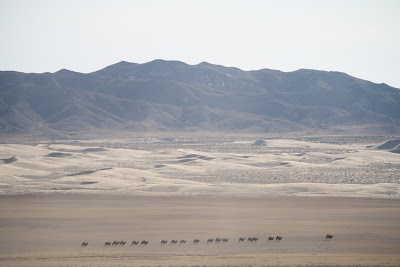
There isn't many nature in this desert. We can only find some shrubs that have adapted to this difficult conditions. The surface is covered by a lot of rocks and sand. Gobi deserts is surrounded by mountains and meadows.
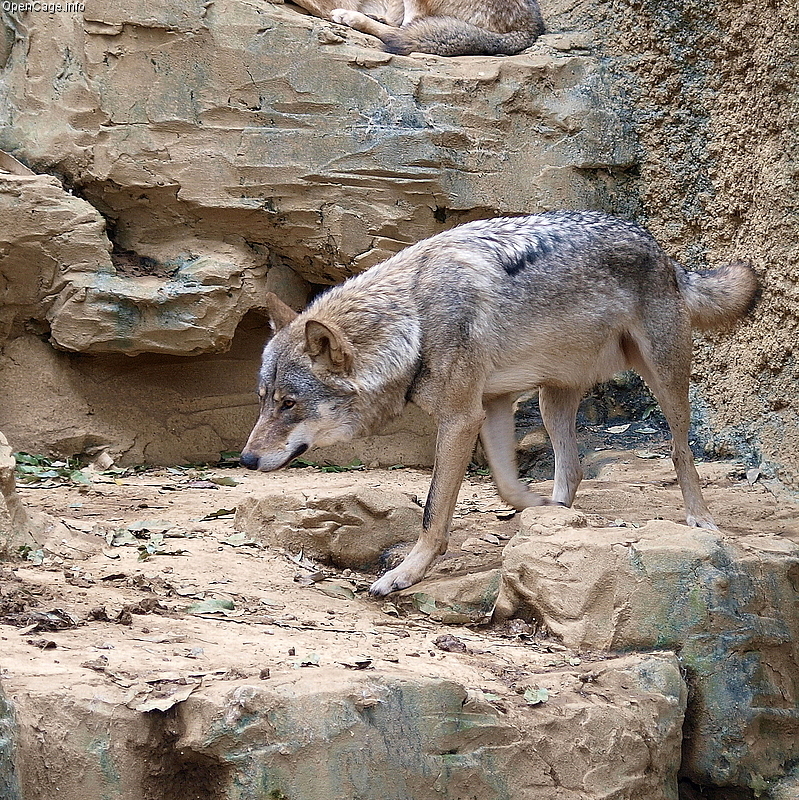
We can find very strange animals such as bactrian camels,takhis, Snow leopards, jerboas(only 11 species in The Gobi Desert),Asiatic ibex, asiatic wild ass, Gobi bear, gray wolf, gold Eagle, musk oxen, plate-tailed gecko, goitered gazelle, and marbled polecat.
Bactrian camel Takhi


Asiatic Ibex Asiatic wild ass


Gobi bear Gray wolf


Gold Eagle Musk oxen


Plate-tailed Gecko Goitered Gazelle


Marbled Polecat

I have chosen this landscape because I think is quite curious and different to the main idea of desert that we have. Also, there are a lot of unusual animal species.
It's the second largest desert in the world.
The climate of The Gobi Desert is very extreme. During the year temperatures vary greatly. In summer they can reach 45ºC and in winter temperatures fall to -40ºC. It is the coldest desert in the world. Precipitation is heavy. It occurs in spring and in summer as snow or ice.
There isn't many nature in this desert. We can only find some shrubs that have adapted to this difficult conditions. The surface is covered by a lot of rocks and sand. Gobi deserts is surrounded by mountains and meadows.
We can find very strange animals such as bactrian camels,takhis, Snow leopards, jerboas(only 11 species in The Gobi Desert),Asiatic ibex, asiatic wild ass, Gobi bear, gray wolf, gold Eagle, musk oxen, plate-tailed gecko, goitered gazelle, and marbled polecat.
Bactrian camel Takhi
Snow leopard Jerboa

Asiatic Ibex Asiatic wild ass

Gobi bear Gray wolf
Gold Eagle Musk oxen

Plate-tailed Gecko Goitered Gazelle


Marbled Polecat
I have chosen this landscape because I think is quite curious and different to the main idea of desert that we have. Also, there are a lot of unusual animal species.
Sunday, 16 October 2016
GEOGRAPHY UNIT 2 : CLIMATE AND BIOGREOGRAPHY IN EUROPE
Here is the vocabulary releted to UNIT 2: THE NATURAL ENVIRONMENT
1.3-CLIMATE AND BIOGEOGRAPHY IN EUROPE:
-Maritime: Type of climate that is found on the western edge, with mild temperatures(0-12ºC) and little temperature variation. The storms which penetrate from the Athlantic create a region of abundant precipitations throughout the whole year.
Flora: Forests (oaks, beeches, pines)


Shrubs, thickets,heather and grassland


Fauna: Deers, foxes,salmon,seals, water birds








1.3-CLIMATE AND BIOGEOGRAPHY IN EUROPE:
-Maritime: Type of climate that is found on the western edge, with mild temperatures(0-12ºC) and little temperature variation. The storms which penetrate from the Athlantic create a region of abundant precipitations throughout the whole year.
Flora: Forests (oaks, beeches, pines)
Shrubs, thickets,heather and grassland
Fauna: Deers, foxes,salmon,seals, water birds
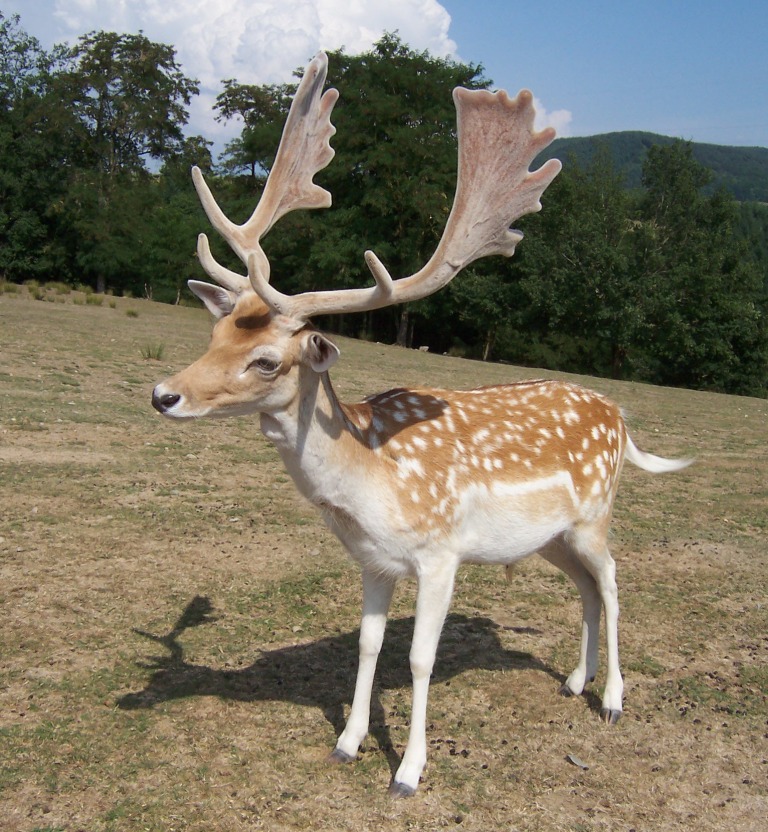
-Mediterranean: This type of climate is found throughout the continent. It has higher temperatures(7-20ºC) as well as lower and more irregular precipitation with vey dry summers.
Flora: Shrubs(maquis),thickets,clear forests(pine), meadowns(holm oak, cork oak)


Fauna: Lynx,fox,rabbit,boar,fallow deer, stork, vulture, reptiles, birds...

.jpg/250px-20160208054949!Wildschein,_N%C3%A4he_Pulverstampftor_(cropped).jpg)
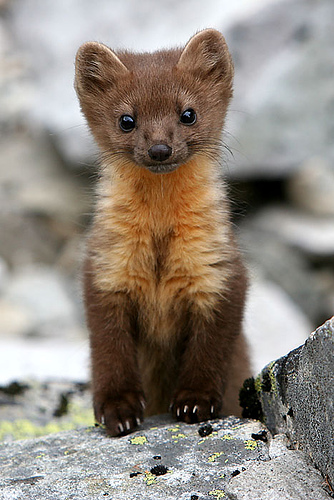
-Continental: This type of climate has lower temperaturas(0-10ºC) and huge temperature contrasts.
Precipitation is medium or low(snow and summer rains)
Flora:Taiga(forest), steppe(grasslands) and mixed forests(firs, pines, birches)


Fauna: Brown bear, wolf ,fox,marten,mink, deer, raptors
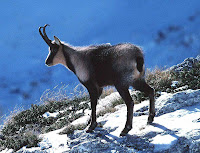
-Alpine: The altitude causes a decrease in temperatures(-0ºC) and an increase in precipitation. Found on mountain ranges.
Flora: Depending on the height(altitudional zonation), forests and Alpine pastures.
Fauna:Deer, Wolf, bear, chamois,marmot and eagles.
-Polar:This type of climate is located beyond The Artic Circle. It has a Little precipitation, mostly in form of snow, an very low temperatures(below zero)
Flora:Tundra(grass and bushes)
Fauna: Reindeer,seal and whale
Subscribe to:
Posts (Atom)